Suspended double iron bed frame designs are attracting interest from furniture buyers who want a floating look without giving up the strength of metal construction. A suspended double iron bed frame typically uses a steel frame anchored to the wall or to a concealed support structure, so the bed appears to hover above the floor while still carrying a standard double mattress. Interest comes from residential projects, rental furniture lines, and small-bedroom setups where visible floor space improves the sense of room size.
How the Suspension Works
The central question for any suspended design is how the load reaches the structure. Most approaches rely on a steel frame fixed to wall studs or a masonry wall, with the mattress platform cantilevered outward. Two points deserve early attention:
- Wall fixing quality decides the whole system, since anchors, studs, or a backing plate must carry the bed plus the user load over many years;
- Frame stiffness controls comfort, because a platform that flexes will creak and feel unstable even when it is structurally safe.
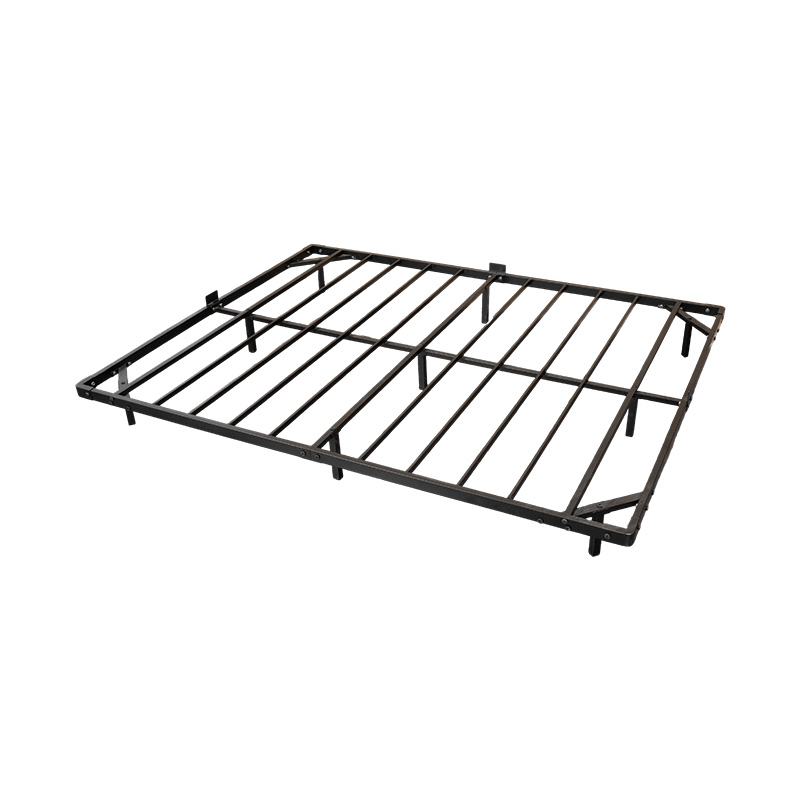
Designers often add a diagonal brace or a hidden leg near the foot end to limit movement, and some models include a floor-level support that is set back so it stays out of sight. Buyers should confirm what the suspension actually attaches to before ordering, since not every wall type can carry a cantilevered bed.
Frame Construction and Finish
Iron and steel frames are usually chosen for stiffness and slim profiles. Tube section, wall thickness, and joint design all affect how rigid the finished bed feels. Welded joints give a clean look but must be dressed and finished carefully, while bolted connections allow flat-pack shipping and easier installation. Surface finish matters in bedrooms, where the frame is visible from several angles. Powder coating offers a durable, even finish, and matte or textured options hide fingerprints better than gloss. Edge rounding and cap fittings reduce the chance of sharp corners, which is a practical concern in small rooms.
Safety, Installation, and Daily Use
Installation is the stage where most problems appear. The frame must be level, the wall fixings must match the wall material, and the platform must sit square so the mattress does not shift. Clear instructions and a fixing kit suited to common wall types help installers avoid improvisation. In daily use, the main concerns are movement and noise. A well-built frame stays quiet, while a loose one develops rattles at the joints. Periodic checks of fixings are sensible, and designers can make this easier by leaving access to key bolts. Weight limits should be stated clearly, and the mattress size should match the platform dimensions to prevent overhang.
Sourcing and Quality Checks
Buyers comparing suppliers typically review samples for frame rigidity, weld quality, finish consistency, and the completeness of the fixing kit. Trial assembly is worth the time, since it reveals whether parts fit without force and whether instructions match the actual components. Packaging should protect the finish during shipping, and spare fittings are useful because small parts are easily lost during installation.
Outlook
Interest in suspended double iron bed frames is likely to continue as buyers seek space-saving furniture with a distinctive look. Designers are expected to keep refining wall-fixing systems and frame stiffness, while buyers pay closer attention to installation requirements and long-term stability. The category rewards clear structural thinking and honest specification of what each frame can safely carry.


 中文简体