A row of exposed bulbs around a mirror calls up dressing rooms and backstage chaos, but the appeal of a dressing table with light bulb is not nostalgia. It is practical. A single ceiling fixture drops shadows under the chin and deepens every hollow in the face. A lamp on one side leaves the other in darkness. Bulbs placed around the mirror hit the face from left, right, and above, wiping out the shadows that hide what makeup actually looks like. Foundation that seemed matched under bathroom light reveals its true undertone. Blending errors surface. The table earns its place by making bad lighting impossible, but only if the bulbs, the surface, and the wiring are all specified correctly from the start.
Daylight, Dimmers, and the Wiring Behind the Glow
Daylight LED bulbs at a color temperature around 5000K provide neutral white light that approximates noon sun. Warm incandescent bulbs flatter skin but mask color. A dimmer with three stops—full brightness for detail work, medium for skincare, low for ambient light—turns a single-purpose fixture into something usable throughout the day. Behind the bulbs, the wiring does unglamorous work. Thin-gauge wire running eight or twelve bulbs at full brightness heats up under sustained load. Wire of adequate gauge with properly insulated connectors runs cool and does not degrade after months of daily use.
- Bulbs positioned on three sides of the mirror so light reaches the face from multiple angles simultaneously
- Daylight LED at 5000K for neutral illumination that reveals true color rather than warming it
- Three-stage dimming for task, routine, and ambient lighting from a single fixture
- Wiring gauge rated for the combined draw of all bulbs running at full brightness without heating
A Tabletop That Survives Acetone and Powder
The tabletop lives harder than most furniture surfaces. Foundation bottles tip and leak. Setting powder drifts onto every horizontal plane. Nail polish remover drips, and acetone dissolves standard lacquer on contact. A surface built to survive this needs chemical resistance more than good looks. Tempered glass wipes clean with anything and does not stain. High-pressure laminate with continuous edge banding keeps moisture out of the substrate. Solid wood coated in conversion varnish or catalyzed polyurethane stands up to spills that would ruin wax or oil finishes in seconds.
The mirror above the table must tilt. A fixed mirror set deep on the table forces the user to lean forward through a twenty-minute routine, straining the back. Adjustable hinges let the mirror angle meet the user where she sits. The frame holding the glass must be rigid. A flimsy frame allows the mirror to sag, and even a slight sag distorts the reflection.
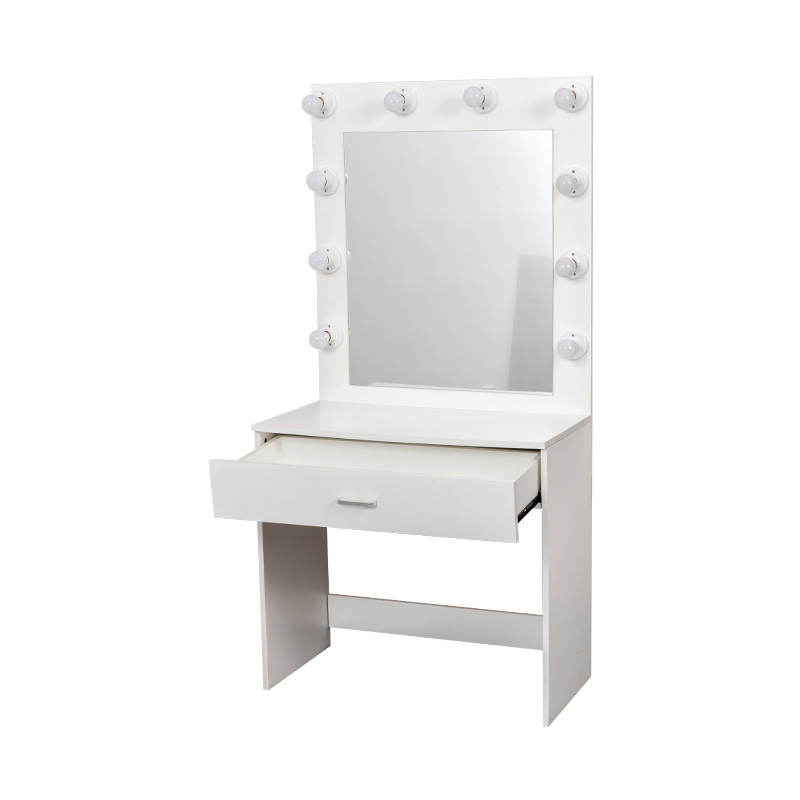
Drawers, Bulb Sockets, and the Hardware You Touch Every Day
Drawer layout determines whether the table stays organized or becomes a junk drawer with a mirror attached. Shallow top drawers with dividers keep brushes, pencils, and small palettes in reach and visible. Deep drawers without dividers swallow items to the bottom. A mix works: divided shallows for daily tools, deeper drawers below for backup stock and larger bottles.
The bulbs themselves carry the visual character. Globe bulbs four to six centimeters across give the classic vanity silhouette. Tubular bulbs read more contemporary. The socket finish—brass, nickel, dark plastic—pulls the look in different directions. Replaceability matters more than aesthetics. A bulb burns out eventually. Standard E14 or E27 bases accept bulbs from any hardware store. Sockets that pop out or open from the front make replacement a seconds-long job instead of a disassembly project.
High-touch areas wear first. Drawer pulls plated rather than made from solid brass or zinc alloy show the base metal through within a year. Solid metal handles hold their finish and can be polished. The mirror frame takes knocks from rings and watch bands. Powder-coated metal or anodized aluminum resists chipping better than painted MDF. The gap where mirror meets frame collects makeup dust. A tight seal or gasket keeps powder from migrating behind the glass where it cannot be reached.
The First Month Tells the Truth
A dressing table with light bulb looks outstanding in a catalog, all bulbs glowing, surface spotless. The real test is thirty days in. Spills have happened. A bulb has burned out. Drawers have been opened and closed hundreds of times. The table that still works has a surface the acetone did not touch, bulbs that were easy to replace, and drawers that stayed organized. Good lighting gets the table noticed. Good construction keeps it in use.


 中文简体
中文简体