A filing cabinet holds weight. Paper is heavy. A full drawer can weigh forty kilograms or more. Open it. Close it. Open it again. That drawer cycles thousands of times over its life. A steel and wood filing cabinet combines a wooden exterior for warmth with a steel structure for strength. The wood gives it the look of furniture. The steel keeps it square under load. A steel and wood filing cabinet factory that gets the drawer slides, the carcass joinery, and the counterweight right builds a cabinet that works for decades.
The Steel Does the Work
The drawer slides are the part that fails first. Light-duty slides rated for twenty kilograms bend under a full file drawer. Ball-bearing slides rated for forty-five kilograms or more run smooth even when loaded. A steel and wood filing cabinet factory that specs full-extension slides lets the user access the back of the drawer. Partial-extension slides hide the back few inches and make filing harder.
The steel drawer body itself must be rigid. Thin-gauge steel flexes when the drawer is pulled out fully loaded. The drawer sags and scrapes the frame. Thicker steel, usually 0.8 millimetres or above, holds its shape. The steel carcass inner frame ties the wooden exterior to a square, rigid box that will not rack out of shape.
Here is what a good steel and wood filing cabinet factory gets right:
- Full-extension ball-bearing slides rated for the drawer weight when fully loaded
- Steel drawer body of 0.8 millimetres or heavier to prevent flex and sag
- Steel inner frame that keeps the carcass square over years of use
- Interlock system that allows only one drawer open at a time
- Counterweight in the base to prevent tipping when a top drawer is open and full
The Wood Makes the Look
The wood exterior is what the buyer sees. Solid wood or thick veneer over a stable substrate like MDF or plywood gives the look of fine furniture. Solid wood moves with humidity. A steel and wood filing cabinet factory that uses veneered panels with a balanced backer sheet reduces warping. The joinery at the corners matters. Mitred corners with splines or dovetails stay tight. Butt joints with just glue open up over time.
The finish protects the wood and sets the colour. Lacquer is durable and repairable. Wax feels natural but needs maintenance. A factory that offers a consistent stain match across the wood panels and the drawer fronts produces a cabinet that looks like one piece of furniture, not a collection of parts.
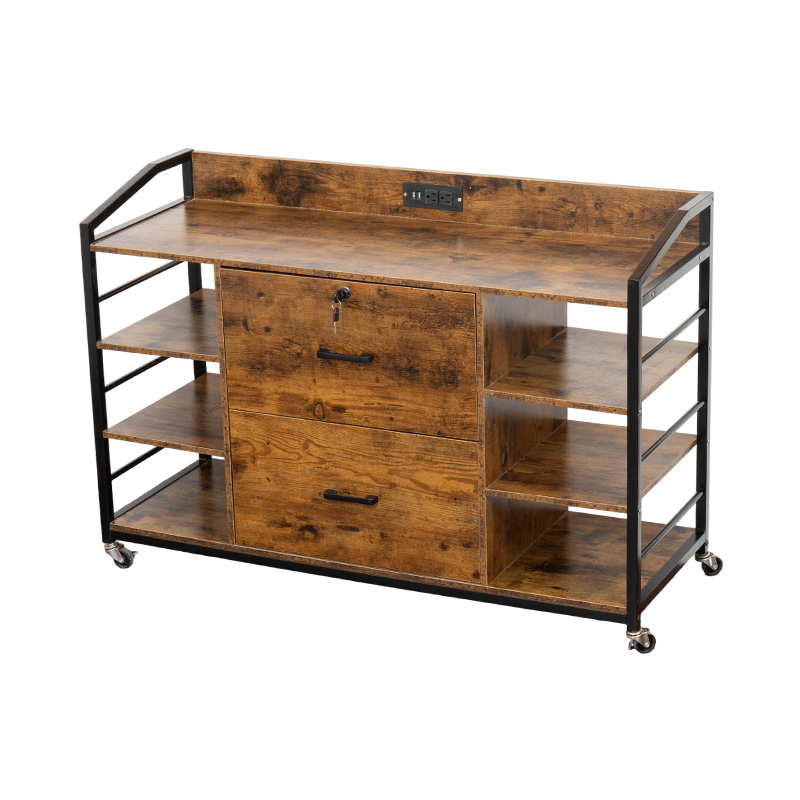
The Safety Interlock
A filing cabinet with multiple drawers open at once tips forward. An interlock system physically blocks the other drawers when one is pulled out. It is a simple mechanism, but it has to work every time. A steel and wood filing cabinet factory that uses a mechanical interlock with steel cams and levers gets reliable function. Plastic interlock parts wear and eventually allow two drawers open together. The counterweight in the rear of the base balances the load. A cabinet without enough ballast tips when a heavy top drawer extends fully.
What to Check on a Sample
Pull the top drawer out fully loaded. The cabinet should stay planted with no front lift. Open and close each drawer twenty times. The slide should run smooth without binding. Check the drawer alignment. Gaps between the drawer front and the frame should be even on all sides. Lock and unlock each drawer. The mechanism should engage smoothly. Look at the steel inner frame. Welds should be continuous, not spotted. Examine the wood finish. The colour should match across the drawers and the side panels.
A steel and wood filing cabinet factory that specs full-extension slides, builds a rigid steel inner frame, and installs a mechanical interlock produces a cabinet that looks like furniture and functions for years. One that uses light-gauge steel, partial-extension slides, and plastic interlock parts produces a cabinet that wobbles, sags, and tips. The difference is in the slides, the steel frame, and the counterweight. Things you notice when the top drawer is full and you pull it open with one hand.


 中文简体
中文简体