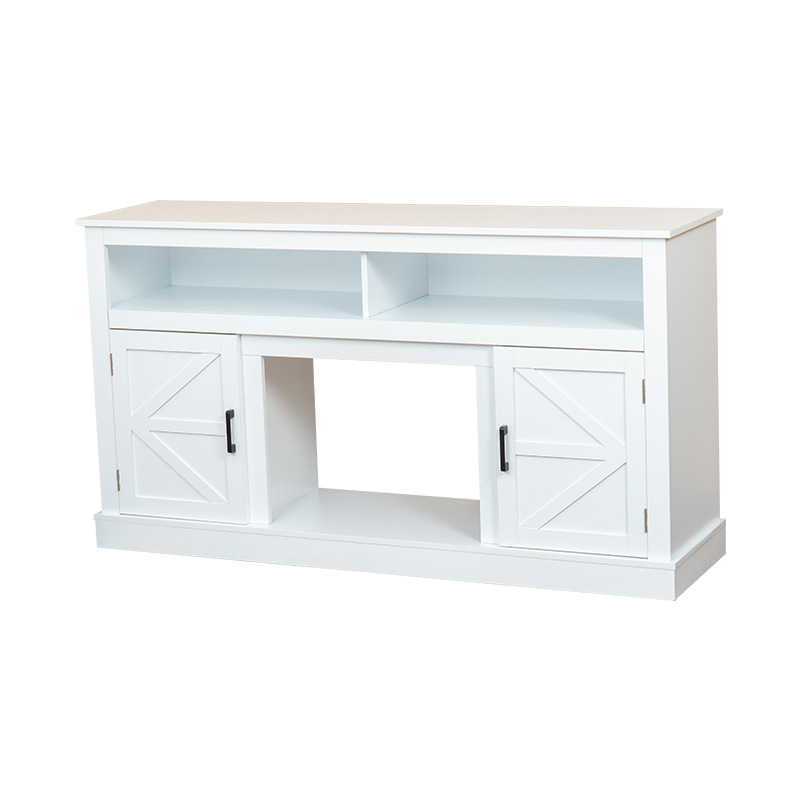
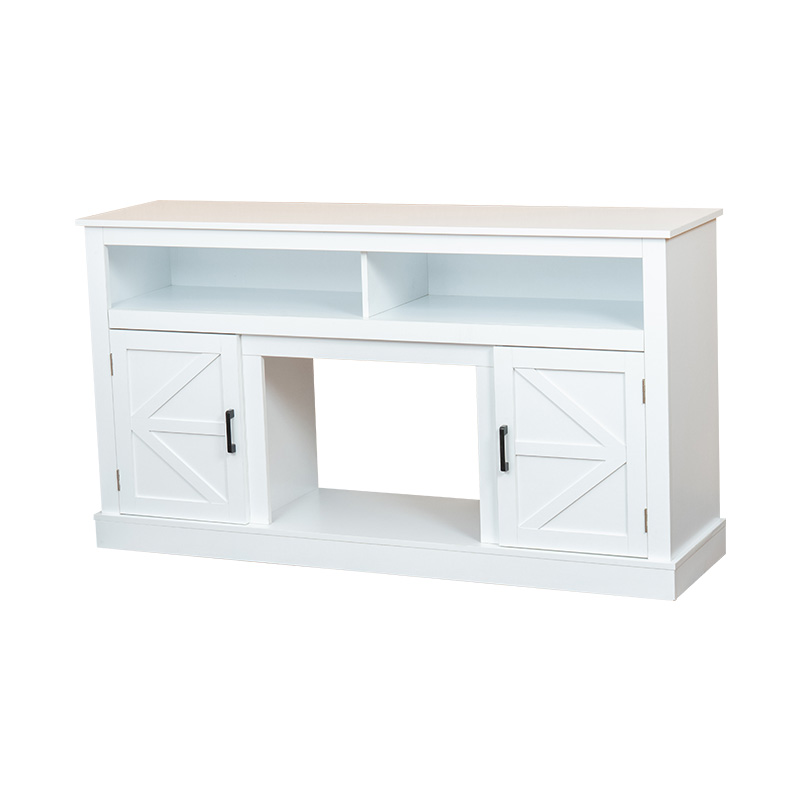
A living room asks a piece of furniture to do two contradictory things. It must house the television, that flat black rectangle that dominates modern attention, and it must also create a sense of hearth, of gathering. A European style white fireplace TV cabinet steps into that tension. It wraps the screen in a mantel, a surround, a visual language borrowed from carved stone and country houses. The white finish lightens the mass. But beneath the paint and moldings, the construction determines whether the cabinet holds its elegance or betrays it the moment heat and weight enter the picture.
The Mantel Is a Shelf First
The mantel on a European style white fireplace TV cabinet is not merely decorative, though it often carries dentil molding, fluted pilasters, or arched panel details. It is a load-bearing shelf. A soundbar, a streaming box, framed photos—these sit on it. The mantel must resist sagging over a span that can exceed one and a half meters. Solid wood holds up but moves with humidity. A well-built mantel uses a laminated hardwood core with a stable white-painted finish that does not crack at the joints when seasons change. The paint itself matters: a catalyzed lacquer or multi-layer enamel resists yellowing and chips better than a single coat of standard latex.
The Firebox Cavity
Inside the lower portion sits the electric insert that produces flame effect and heat. The cavity must be built to precise dimensions. Too tight and the insert scrapes during installation. Too loose and gaps appear, breaking the illusion of a built-in hearth. The opening should be reinforced along its inner edges. Heat cycles on and off, and materials that expand at different rates eventually show cracks in the painted finish around the opening. MDF with a heat-resistant primer fares better than solid wood here because it moves less.
Cord management is a test of thoughtful design. A simple hole in the back panel leaves a tangle of wires visible against the white backdrop. Better designs route cables through internal channels that keep the white surround clean. A white cabinet shows clutter more than a dark one.
Here is what separates a European style white fireplace TV cabinet built to a standard from one built to a price:
- Mantel shelf with a laminated core that resists sagging across wide spans without cracking the painted surface at joint lines
- Firebox opening reinforced around the inner perimeter with material that handles repeated thermal cycling
- Internal cable channels that route wires out of sight rather than leaving them exposed against the white backdrop
The White Finish That Must Stay White
White furniture ages visibly. Sunlight yellows some whites while leaving others untouched. If the factory uses different base materials for the mantel and doors—solid wood for one, MDF for the other—they take the paint differently. One yellows faster. The mismatch appears gradually over a year or two, and once noticed, it cannot be unseen.
A consistent substrate under the paint avoids this. Cabinets built from a single engineered material with white primer and topcoat applied in the same batch age uniformly. The sheen level also matters. A dead-flat matte white shows fingerprints and demands frequent wiping. A slight satin, somewhere between five and fifteen percent gloss, hides marks without reflecting glare from the screen above.
Carved Details and Hardware
European style spans French provincial, English Regency, Italianate influences. What unites them is a certain restraint. Raised panels with a gentle bevel, fluted columns framing the firebox, dental molding along the mantel edge. These details should catch light and shadow without collecting dust in deep crevices. Paint pools in deep carvings, softening the crispness. A factory that masks carved areas and sprays at consistent pressure keeps the detail legible.
Hardware plays an outsized role on a white cabinet. Dark iron pulls or unlacquered brass knobs stand against the white field. If plated rather than solid, the plating wears through at touch points. Fingers hit the same spot thousands of times. Solid brass or forged iron develops a patina. Plated zinc reveals dull grey once the top layer rubs off.
Weight and Wall Connection
A European style white fireplace TV cabinet is heavy. The mantel, side panels, internal bracing all add mass. This weight resists bumps but becomes a safety concern if the unit is tall or the television sits on the mantel rather than being wall-mounted. A wide base keeps the center of gravity low.
For units flush against a wall, the back panel must accept anti-tip brackets. A thin hardboard back stapled to the carcass is not enough. A reinforced back panel with a solid horizontal brace gives the bracket something to bite into. This detail is invisible but critical in a home with children or pets.
There are additional signs of careful construction worth looking for:
- Leveling feet adjustable from inside the cabinet without tipping the whole unit, so uneven floors do not translate into a tilted mantel
- Reinforced back panel with a solid brace at mounting height for secure anti-tip anchorage
- Hardware made from solid metal rather than plated zinc, so touch points wear gracefully instead of revealing a different material underneath
Living With It
A European style white fireplace TV cabinet frames the screen not as an alien object but as part of a composition that includes a mantel and the suggestion of a hearth. The white keeps the piece from feeling heavy. The carved details give the eye a place to rest when the screen is dark. But these qualities only last if the mantel does not sag, the finish does not yellow unevenly, the firebox opening does not crack, and the hardware does not wear through. These are not things visible in a photo or a showroom. They appear after a winter of heat, a summer of sunlight, a year of fingers pulling the same brass knob. A cabinet that still looks right at that point is the one built around details that never make it into the listing copy.


 中文简体
中文简体